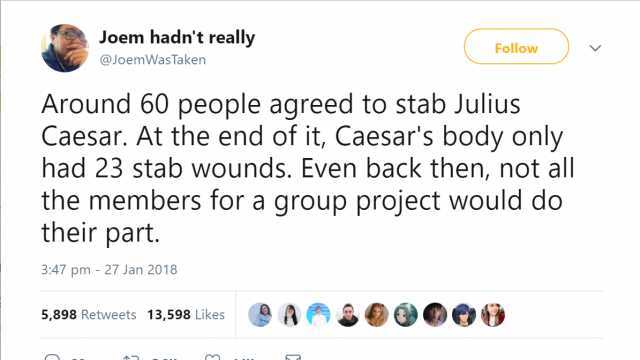
We will proceed as a class through this work and work in teams. There are always downsides to group projects.
But teams are life. And why? Because you can do more as a group than an individual. So we will put up with the downsides both for the educational potential of learning teamwork and for the potential upside of making something big.
There are many things that can make you feel good about your team:
- Topic, genre of game, engine, etc. aligns with personal interests
- You feel like your skills will be put to good use
- You feel like your weaknesses will not undermine the team
- You want to work with the others on that team
- You feel like this group of people can be successful at their goals
Successful teamwork, like marriage, is not about how cool your partner is but how well and consistently you communicate. You will need tools (like Slack, Google Drive) and procedures to make sure everyone understands the direction of the project and that they know where and how to contribute.
You will never find perfect harmony on any real life team. You will not be judged for not having the perfect team. Your own feelings of success can revolve around how you acquit yourself rather than the luck of your draw, if you let them.
You cannot know how a team will work together until it does See again, marriage. This is the blindspot that comes up the most often in classes. Some people know each other, and we infer a lot about the others based on our limited, prior experiences, filling in large gaps of knowledge with assumption. There’s no other way, but if you realize your assumptions are just that you might be able to discard them more easily once you do get information. Good teammates are often surprises. Bad ones too. Like a family member who is friendly enough until there’s an inheritance to deal with.
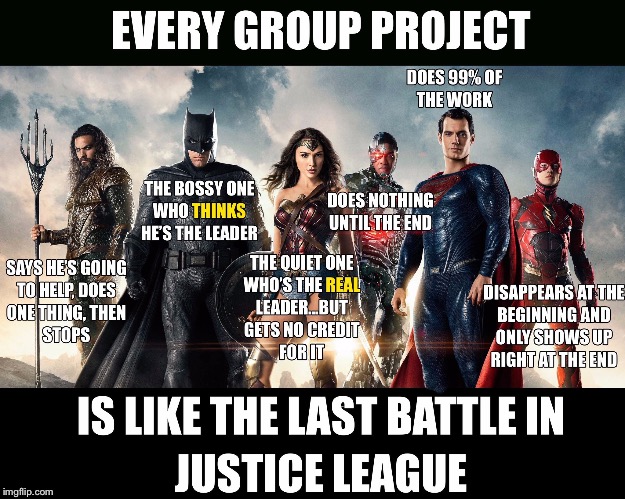
It will be unfair. Teamwork is not the same thing as dividing the work up equally. There is often someone who carries more than the rest, and it’s always obvious. The goal here is not to produce some uniform product but to make whatever you can, together. Look for ways that you can lean on individual strengths or effectively mentor each other (say if one person has programming experience and another really wants to give it a go). And don’t just let these different strengths be an excuse to go off on your own. Get to know each others’ work and make sure everyone on the team has a good sense of the project as a whole, even if there’s some part they’re not on. This is not possible on larger projects, but is one of my main reasons for working in small groups like this.
You can always break up. Don’t let communication or similar problems linger. Try to work them out and be ready to get help in cutting bait if you can’t. The only truly unsuccessful team projects I’ve seen are when a team has some obvious problem working together that they just try to ignore.
Mostly, for structure, I don’t want to lose too much time to the act of choosing teams. Assigning teams randomly might be fun but could walk over potential synergies. I don’t want anyone to end up left out. This often happens for reasons unrelated to the work being done and reflective of stereotypes like gender, race, sexual orientation and so on.
Neither do I want strictly functional designations, like artist and programmer. It’s okay if you have some experience with a useful skill set, but that doesn’t have to be your identity here, nor should it be a wall for someone who wants to try something new.
Our work together in the beginning will create some opportunities to get to know your classmates, to start discussing possible projects and teams. I only ask that you take this matchmaking seriously even if it is informal, and that you double check your efforts regarding being inclusive. Give extra chances to those who might otherwise be on the periphery. If a group or idea gets too big, we can always have two teams working in parallel. Ideally even, the closer our work is to each other (topic, genre, engine, audience, etc.) the better we will be as audiences and critics of that work. It will be more meaningful to all of us.
Try out your potential teams and teammates in our small work, design projects or class discussions. My hope is that by the time that I’ve made room to formally decide on teams for the major project, there’s nothing to decide. If need be though, we will painfully or randomly sort by Fall Break.